How Do You Calculate Natural Abundance . The relative abundance of an isotope is the percentage of atoms with a specific atomic mass found in a naturally occurring sample of an element. To calculate the atomic mass of oxygen using the data in the above table, we must first. Natural abundance of the lead isotopes Download Table from www.researchgate.net Set up the relative abundance problem. How much of x is in y. To learn how to calculate atomic mass using percentage abundance and isotopic masses click here.
Simpson's 1/3Rd Rule Calculator. Further, we will calculate the value of we will start with in the function and then incremented by the value of δx by 0.25 till x tends to 3. In the source code below, a function f (x) = 1/ (1+x) has been defined.
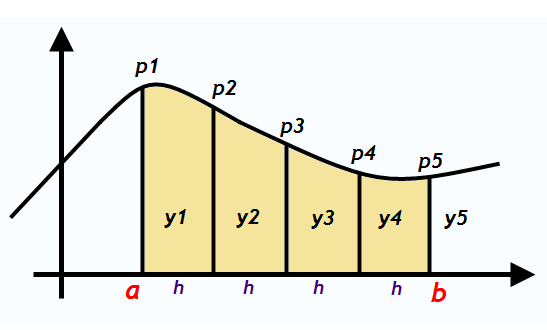
Area Calculation using Simpsons One Third Rule for Volume from esurveying.net
The basic idea is to. Get the free simpson's rule calculator myalevelmathstutor widget for your website, blog, wordpress, blogger, or igoogle. Area calculation by simpsons one third method is first done for each section.
Use Simpson’s 1/3 Rule It To Solve Integrals, 3.
N=input ('enter number of intervals (multiple of 2)='); It is calculated by increasing the number of partitions to double from 2 to n. From x = to x =, with interval width equal to
By Browsing This Website, You Agree To Our Use Of.
It helps us to make the approximations more precise as compared to trapezoidal rule where straight lines segments were used instead of parabolic arcs. A simpson’s rule calculator is an online tool specifically designed to evaluate the definite integrals via simpson’s rule. Multiply to this total sum by 1/3 rd of the common distance between the ordinates which gives the.
Simpson's 1/3, Simpson's 3/8 Rule 1.
Simpson's rule, or simpson's 1/3/ rule, in calculus, is a formula for approximating the value of a definite integral. Here are the steps that explain how to apply simpson's rule for approximating the integral b ∫ₐ f(x) dx. This method is based on newton's cote quadrature formula and simpson 1/3 rule is obtained when we put value of n = 2 in this formula.
Simpson’s Rule Can Be Derived By Approximating The Integrand F (X) (In Blue) By The Quadratic Interpolant P (X) (In Red).
Simpson’s 3/8 rule states : Simpson’s 1/3 rule or composite simpson’s rule is based upon a quadratic interpolation, while simpson’s 3/8 rule is based upon a cubic interpolation. We use cookies to improve your experience on our site and to show you relevant advertising.
Simpson’s Rule Is Used For Approximating The Integral Using Quadratic Polynomials Where Parabolic Arcs Are Present In Place Of Straight Line Segments Used In Trapezoidal Rule.
Like the trapezoidal rule, simpson’s 1/3rd rule is also used to find the integral value from the range a to b. As the program gets executed, first of all it asks for the value of lower. In this article, we are going to develop an algorithm for simpson 1/3 rule.


Comments
Post a Comment